

Medical billing is full of behind-the-scenes adjustments that quietly impact how much providers are actually paid. Some of these changes are easy to spot, while others happen automatically, often without clear explanation on remittance advice or payer communications. Sequestration is one such term that frequently appears in billing conversations, compliance updates, and reimbursement discussions, yet it’s commonly misunderstood or overlooked.
For billing teams, whether working in-house or alongside a medical billing virtual assistant, understanding these adjustments is critical to accurately tracking revenue and avoiding confusion around payment differences.
Without further ado, let’s have a look at what sequestration in medical billing is.
Sequestration in Medical Billing: A Complete Overview
Sequestration refers to a mandatory, across-the-board reduction applied to certain Medicare payments, regardless of how accurate or compliant a claim is. When sequestration is in effect, Medicare reduces the approved payment amount by a fixed percentage before issuing reimbursement to providers. This reduction happens automatically and is applied after Medicare determines the allowed amount for a claim.
In practical terms, this means providers receive slightly less than the expected Medicare reimbursement, even when services are medically necessary, properly documented, and correctly billed. The adjustment appears on the remittance advice as a separate reduction, which is why it often causes confusion for billing teams and finance leaders.
How Sequestration Entered the Healthcare System
Sequestration was introduced through the Budget Control Act of 2011 as a federal mechanism to control government spending when deficit targets were not met. Instead of selectively cutting specific programs, the law triggered automatic spending reductions across multiple areas of the federal budget.
Because Medicare represents one of the largest categories of federal spending, it was included in these reductions. As a result, sequestration became embedded into Medicare reimbursement, turning it into an ongoing financial factor for healthcare providers rather than a temporary or operational billing change.
How Sequestration Impacts Medicare Payments
Once sequestration is in effect, it directly affects how much providers are paid for Medicare services. Even though claims are processed normally, the final reimbursement amount is reduced before payment is released. This makes sequestration easy to miss but hard to ignore financially.
How the Reduction is Applied
Sequestration is applied after Medicare calculates the allowed amount for a claim. The claim can be fully approved, correctly coded, and medically necessary, yet the final payment is still reduced by a fixed percentage. This adjustment is automatic and does not require any action from the provider or payer.
Why the Impact Adds Up Over Time
While the reduction on a single claim may seem minor, the effect compounds over time. Practices that submit a high volume of Medicare claims often feel the impact most, as small reductions across hundreds or thousands of claims can significantly affect monthly and annual revenue.
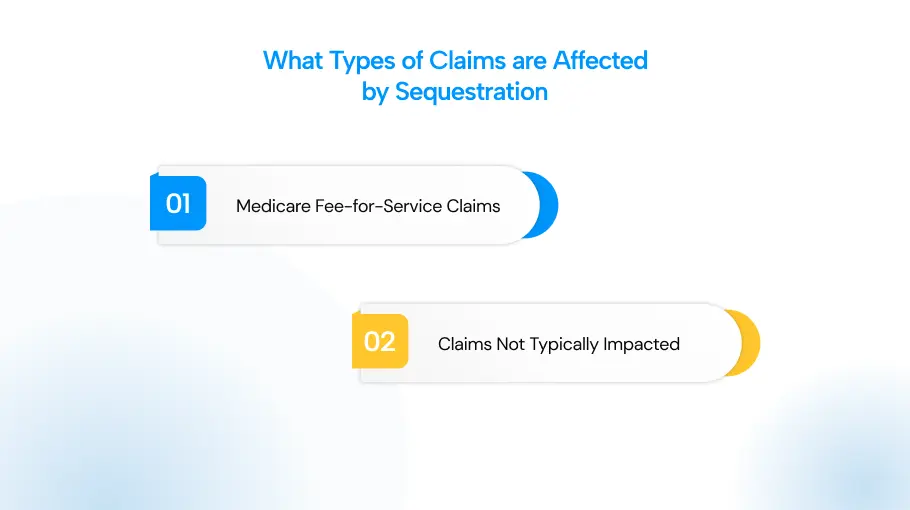
What Types of Claims Are Affected by Sequestration
Not all healthcare claims are subject to sequestration, which is why confusion around its application is common. Understanding which claims are affected helps providers set realistic reimbursement expectations and avoid unnecessary follow-ups.
- Medicare Fee-for-Service Claims
Sequestration primarily applies to traditional Medicare fee-for-service claims under Medicare Part A and Part B. This includes payments to physicians, hospitals, home health agencies, and other Medicare-enrolled providers billing under standard Medicare reimbursement models.
- Claims Not Typically Impacted
Sequestration does not apply universally across all payers or healthcare programs. Medicaid, commercial insurance plans, and certain Medicare Advantage payments are generally not affected, although policies can vary based on federal guidance at any given time.
How Sequestration Appears on Remittance Advice
One of the reasons sequestration is often misunderstood is how it appears on remittance advice. The adjustment does not look like a denial or correction, which makes it easy to overlook during posting and reconciliation.
Where to Find the Adjustment
Sequestration usually appears as a separate reduction line on the remittance advice rather than being bundled into the allowed or paid amount. It may be labeled differently depending on the Medicare Administrative Contractor, but it is not tied to claim errors or remark codes.
Why Billing Teams Miss It
Because sequestration is not correctable, billing teams may dismiss it as informational and move on. Over time, this lack of attention can lead to gaps in revenue reporting and misunderstandings about why expected payments don’t match deposits.
Why Sequestration is Often Confused With Billing Issues
Sequestration frequently gets mistaken for billing errors, payer issues, or compliance problems. This confusion can lead to wasted effort and unnecessary rework by billing teams.
It is Not a Denial or Underpayment
Sequestration does not mean the payer disagreed with the claim. The claim was accepted, adjudicated, and approved correctly. The reduction happens only because of federal budget legislation, not because of billing quality.
Why Appeals Do Not Apply
Since sequestration is not tied to claim processing, it cannot be appealed or reversed through standard billing workflows. Understanding this early helps teams avoid chasing non-recoverable adjustments.
Final Perspective
Even small payment reductions matter in the current reimbursement environment. Sequestration quietly affects revenue without triggering operational alarms, which makes awareness critical for leadership and finance teams.
When organizations understand how sequestration works, they can plan more accurately, avoid mislabeling payment differences as errors, and build clearer financial expectations.
Frequently Asked Questions
- What is sequestration in medical billing?
Sequestration is a federally mandated reduction applied to certain Medicare payments after claims have been approved and processed.
- Is sequestration the same as a claim denial?
No. Sequestration applies to paid claims and reflects a statutory reduction rather than a billing or documentation error.
- Can providers appeal sequestration reductions?
No. Sequestration is required by law and is not subject to appeal.
- Does sequestration affect patient bills?
No. Patients are not responsible for sequestration-related reductions.
- How should sequestration be handled in reporting?
It should be tracked separately from denials and operational adjustments to preserve financial accuracy.